


Connecting the Disconnected: Artist Poppy’s Gothic Reinvention of an Ancient Script
Interview by Taleen Postian
Noor: I wanted to center the conversation around your trchnakir designs. I would love to hear how you would describe the design and the tattoo. If you were describing it to someone who had never seen it before or is unfamiliar with the concept.
Poppy: I wanted to spark emotion. Because it's dark and creepy and a little, you know, gory, so there should be feelings of discomfort. And I feel like that really reflects on my take on our [Armenian] history and even the current state of everything.
It's a form of honoring our culture and the traditions, but taking a completely modern twist to it. Because there are a lot of people that I've met that aren't super interested in our traditions, they are still very hyerenatser, but they are not connected truly. So I feel like this kind of brings those two things together, if that makes sense. A way to connect the people who are disconnected.
Noor: Where did you get your inspiration for this [trchnakir] design? If you can pinpoint a certain thing you saw or an idea you had at one point, or if someone brought the idea to you.
Poppy: It's kind of silly. A lot of the style definitely reminds me of H.R. Giger. His style is kind of creepy. I am fond of cyber-punk vibes, I think that's just something that I've been interested in for a while, but the trchnakir itself came from, honestly, my last name. My last name is Magdesyan, but originally it was Maghdes, which comes from seeing death or a death-seer. I just thought that was badass.
I’ve worked with trchnakir for 10+ years. The first time I made one was in high school. And then I started teaching it to kids. Every week, I was doing different designs. It's just something that I really fell in love with. I love the idea, the concept, the fact that it's been around for so long. But yeah, I was like, "Maghdes," that's metal. I should make the font, metal, gory, and disturbing to fit with it.’ That's where it came from.
Noor: I love that. I never would have guessed that just looking at the design. I'm glad that you made that connection for me, and our readers will get to hear that too. I know that the example that you have sketched and have tattooed at this point is an "Armenian Հ." Have you designed any other letters of the alphabet?
Poppy: I have the whole word "Մա" and then the "Տ" and the "Ե." And then the ‘Ս’, which is a work in progress. I have all the different layers, the concept, and then the references… that page that I'm working on has like over a hundred layers.
There are different versions, too. I started with some letters that I thought were done, and then I kind of went back to it, and I was like, ‘This is not it. This isn't finished.’ I kind of just redid the whole thing. That's why it's also been in progress for a couple years.
Noor: Oh really?
Poppy: Yeah, this is something I've been working on for a long time, 'cause I really wanna perfect it and like, every letter has a unique kind of feel to it and different style almost, they're all similar, but they're slightly different.
Noor: Noor magazine focuses on the space between heritage and innovation, tradition and rebellion. How do you think your tattoo art speaks to that conversation?
Poppy: It’s a way of honoring our culture, but in a new light, in a modern form. I also just want it to reflect on our history, the losses that we've endured, and how they're often falsified. Like, for example, like the idea of being a soldier and fighting for our country, like in Armenia, it's a big deal, right? All the kids are like super stoked about it. They look up to the idea of being a soldier. And honestly, the reality is it's really not the best, it could be a death sentence. And especially one incident, I remember, the government abandoned quite a few soldiers in Artsakh. And I just thought, that's a really shitty thing to do, especially for the people who are enthusiastic and want to fight for their country. To leave them alone, to fend for themselves. There are these little hidden things that are fucked up. Not a lot of people talk about or know about it. The theme of that darkness and that gore is kind of like a reminder of, ‘hey, things are not so great. They're not so bright. These things happen.’ I think that the diaspora is also kind of emotionally disconnected from that truth. It's just different. I feel like we're told different stories, and it's like everyone's in different places.I want it to send a message to reconnect us to those stories. It's kind of like a reminder. Obviously, we know all the history is not the best, but I think people are forgetting. You're kind of losing the path, you know, like a lot of people are focused on the wrong things instead of rebuilding or doing things that are worthwhile.
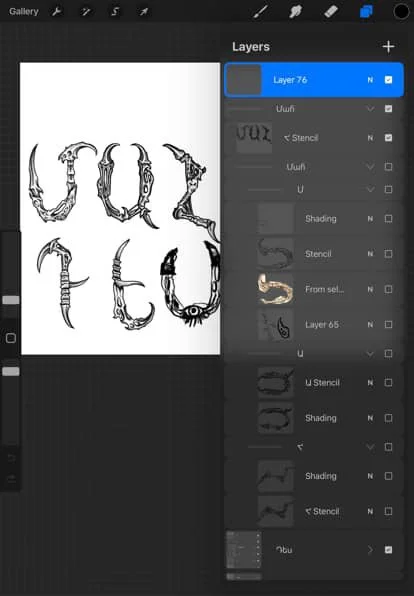
Annie Magdesyan (Poppy), “Written in Viscera,” 2024
Noor: I appreciate and noticed how you said ‘connection’ both in that you're trying to connect the disconnected and to bring them back into the culture, but then also reconnecting them to not only the good parts but also the harder parts of our history and our current times.
Poppy: Thank you so much. That really means a lot.
Noor: In general, are there any other overarching themes present in your tattoo art?
Poppy: There's something new that I did. It's a letter, an Armenian letter, but it was inspired by khachkars. It's actually one of my favorite pieces I've done because I also really love khachkars. I've made my own sculptures. That's definitely something I want to dive into a little bit more too. It’s not just the dark and gory side; it's also like Celtic knots and these things that are way older than we think.
But I did want to bring up [in] a lot of my art, I have noticed subconsciously, I've added a lot of blues and oranges. Even the Armenian flag colors, some red, blues and orange, I just gravitate towards those colors. And I didn't notice it until I printed out my artwork and looked at it as a whole. Looking into it, there is a sense of symbolism in that, like the blues are like the sorrows and the sadness and then the orange is like the light and like the resilience, somehow it just all ties together.
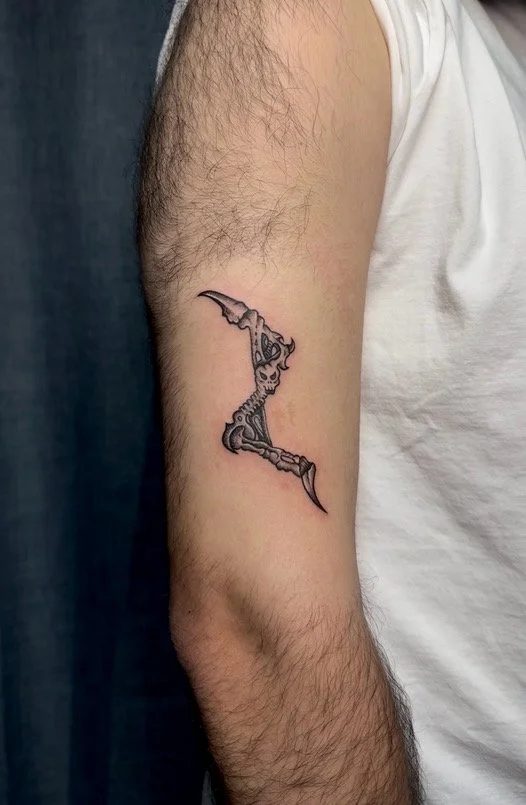
Annie Magdesyan (Poppy), “Written in Viscera,” 2024
Noor: What other designs or ideas do you want to explore?
Poppy: I want to make the whole alphabet. They could be tattoos, but I want to make them as paintings. Literally just an entire wall full of these. So they really show the impact and what I'm telling you, and like, going for it. I think the entire wall will definitely present that emotion that I'm trying to get out of people: intimidating, and there's a lot to look at. I need to get working on that a little bit more. This is definitely a project that's going to take years but it's in the works. I want to put them in galleries and things like that.
There was a protest like a few years ago, I think 2022 when the whole thing started. There was just a big cardboard piece that I got from my school that they were just throwing out. It was probably close to 12 feet long. I made a big poster out of it and that was featured in the LA Times. There's a lot of things that I work on that all kind of tie together, like the political, you know, the poster, but it's also kind of a piece of art, because that's originally kind of the idea. I got a bunch of friends together, and we all painted it, and it's a way of bringing people together and fighting for what we think is right.
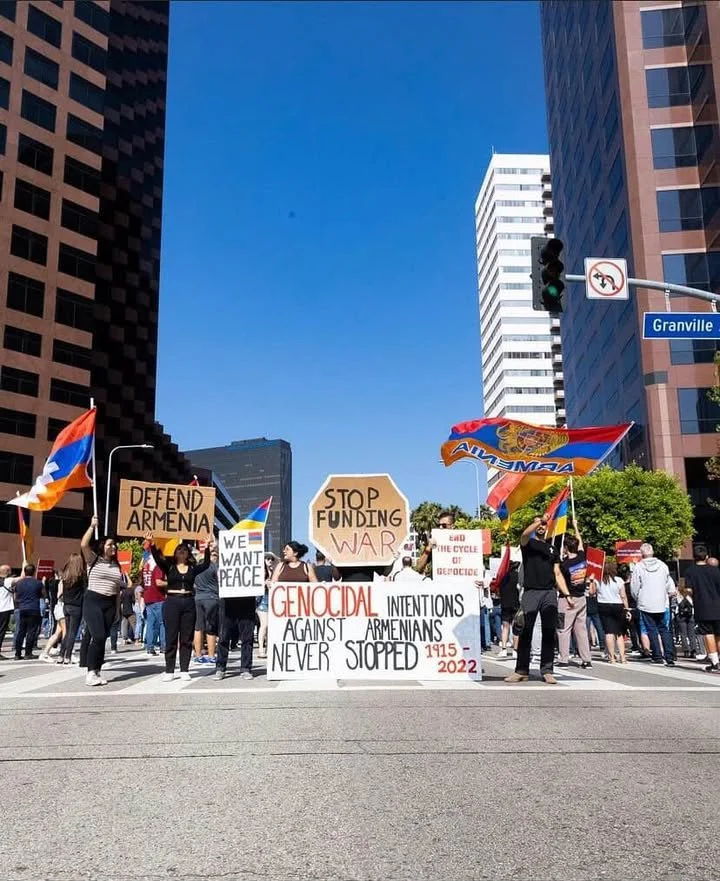
[center poster] Annie Magdesyan (Poppy), “Artsakh, The cycle continues”, 2022
[photo] Genaro Molina / Los Angeles Times
Noor: Another theme that kind of overarches our magazine is the definition of our name, which is Noor. In Armenian, it's pomegranate, and in Arabic, it is light or illumination. How do you see your work or your art fitting within those ideas?
Poppy: Even though my art oftentimes has a dark tone to it, a lot of skulls, a lot of darkness or uncomfortable emotions, I see it also as a form of shining light into the struggles of our diaspora, to shed light on the stories that are overlooked and misunderstood. My art is a space for reflection and connection. It’s the light at the end of the tunnel type of thing.
Noor: I'd love to hear about your process of creating your art. We'd love to hear any other thoughts you have about how you come up with your ideas, how they turn into physical pieces of art, the whole process.
Poppy: Honestly, the process is kind of like… what I feel. A lot of times, I turn to art as a form of therapy. It's just a way to turn my brain off and work on something, but a lot of times it's just what I'm feeling in the moment, and it doesn't even necessarily have to be like I have something in my head that I know I want to create. Sometimes I just have to start creating and then it comes together. It really depends on my mood and what I'm working with. Like for collaging, I never know what I'm going to end up with. I just kind of flip through and like I have boxes and boxes of magazines that I flip through every time I collage. And it's just like every time I see something new and I'm like, okay, I can put this together, this fits with that. And then, it slowly starts coming together. One of my tattoo pieces I'm working out, I did a few different sketches, composition. Then I went with this one, and then I kind of went over it with the pen. I was like, okay, now this design, I'm going to work with. I like to draw on paper before my iPad, because it's more natural. I hate technology dude, I hate it. It's not natural for me. So paper and pencil is my favorite thing. I need to put it down and then I can see clearly and take from that. It also just depends on the medium.
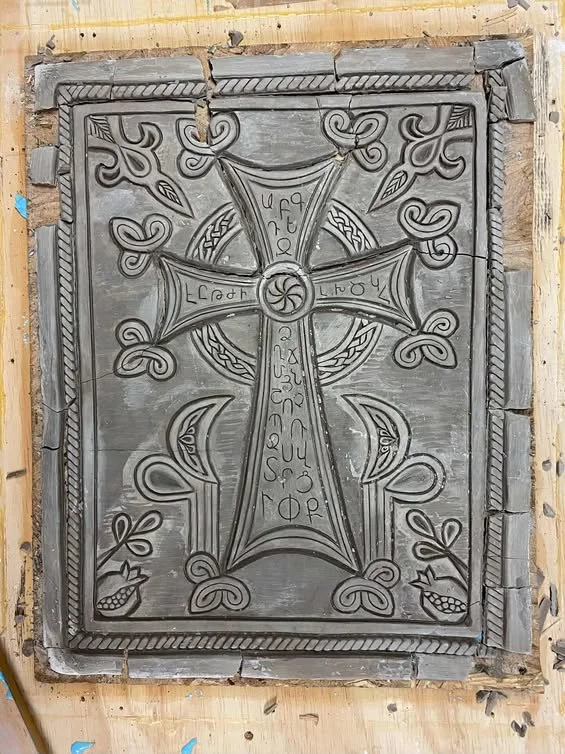
Annie Magdesyan (Poppy), “Khachkar No. 1”, 2022
Poppy: Even the collages that I work on, I don't cut them out and glue them right away. I play with it. I have it sitting on my desk for over a week and I just stare at it or rearrange things every couple of days, you know, it's like I always on the back of my head, it's always back there, thinking like, how can I improve it? What can I do to it? I have to stare at it for a long time and go back to it for it to actually make some progress.
Noor: You brought up this artist, H R Giger that you love. I would love to hear what other artists or artistic movements inspire you?
Poppy: That's like more for the trchnakir, the gory trchnakir design is inspired [by him]. I do love painting. Picasso is okay; there are definitely some parts that I take from his work that I really appreciate. Honestly, there are a lot of people that I see that I get inspired from through, I hate to say this, but social media. It depends on what I'm going for. I don't know. It's a mix. I just see things and I'm like, yeah, that's cool. I can work with this. But like, style-wise, I don't necessarily think I have a specific [inspiration]. I think I'm still kind of developing my own style.
Noor: Do you find that traveling a lot influences the art that you make and your process with it?
Poppy: For sure, for sure. I'm a very visual person. So staying in the same place for too long literally kills my creativity. I need to go out there and experience something. I need to feel something. (laughs) I need to get inspiration from somewhere I don't look at all the time. For example, this Portland, Oregon trip, I'm really looking forward to it because I'm going somewhere new. I travel with my dog a lot. She also helps me slow down and pay attention to details. If I were alone, I wouldn't have to stop and go for a little walk or slow down, you know, take my time. Honestly, it really helps to slow down and just pay attention to all the details and really feel connected to where I am during my travels. I usually take the sketchbook and have little sketches of things that I like, or I'll take my pictures and, you know, try to do something like that. 100% in traveling, it gives me life. I want to eventually do birthright [Armenia]. Eventually, I would love to just move to Armenia and do Birthright, and connect a little bit more, have experience living there and for longer than what I have been there. I've done youth core. I stayed there for six weeks. That was a really great experience. And that inspired me a lot. So if I could go and live there for like six months, who knows what can come out of it, you know? I'm gonna miss pizza though. They had pizza, but it's just not good.
Noor: We discussed how the trchnakir specifically bridges tradition and rebellion and modernization. I wanted to ask if there is anything else more generally in your art, that you find even outside of Armenian themes, if you find any modernization or reinterpretation or reimagination, as part of what you produce?
Poppy: Yes, a lot of my work has Armenian motifs. I have a lot of mixed media pieces. There's also spiritual elements, which is kind of new to me, you know, I am not very religious in any sense, but there has been a sense of me being drawn to the spiritual elements and including it in my work, maybe because it's a part of our history, I’ve been finding that kind of interesting lately. Definitely nature and colors. When I do work with colors, it is usually very expressive and loud and kind of bold. I just like that sense of urgency, or you know, in your face. Sadness and light and memento mori. That word really inspired me a lot, and a lot of my work too. There's always elements of life and death in my work. It's just very emotional pieces. I'm connecting with them emotionally.
Noor: Is there anything else that I haven't asked you about that you would love to touch on during the interview?
Poppy: I think a lot of my work comes from the whole Armenian inspiration, my time of being an activist and AYF... I don't know, it's just…I've changed a lot over the years, and being able to have had that part of my life, it really changed the way I see things. I don't know. It's just very different to have a community and to be involved in that way. And also to see everything change.
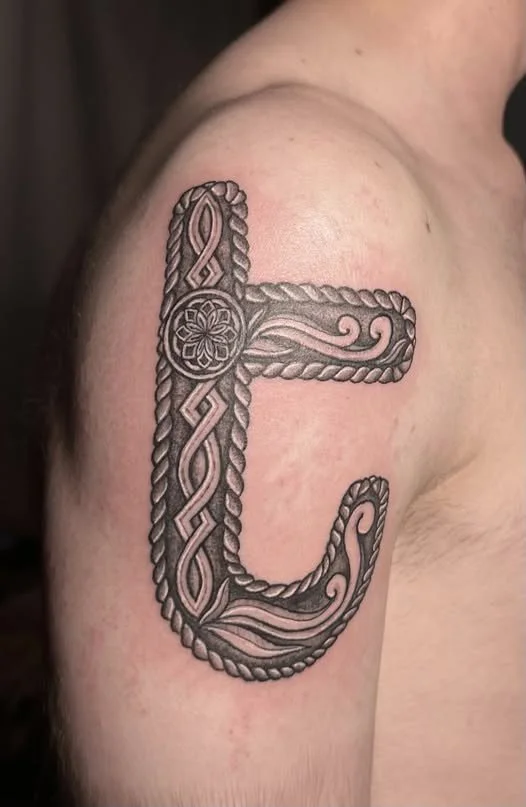
Annie Magdesyan (Poppy), “Yech (cover up)”, June 2025
If you are interested in seeing more of Poppy’s work, see here: @poppy_tattoos